
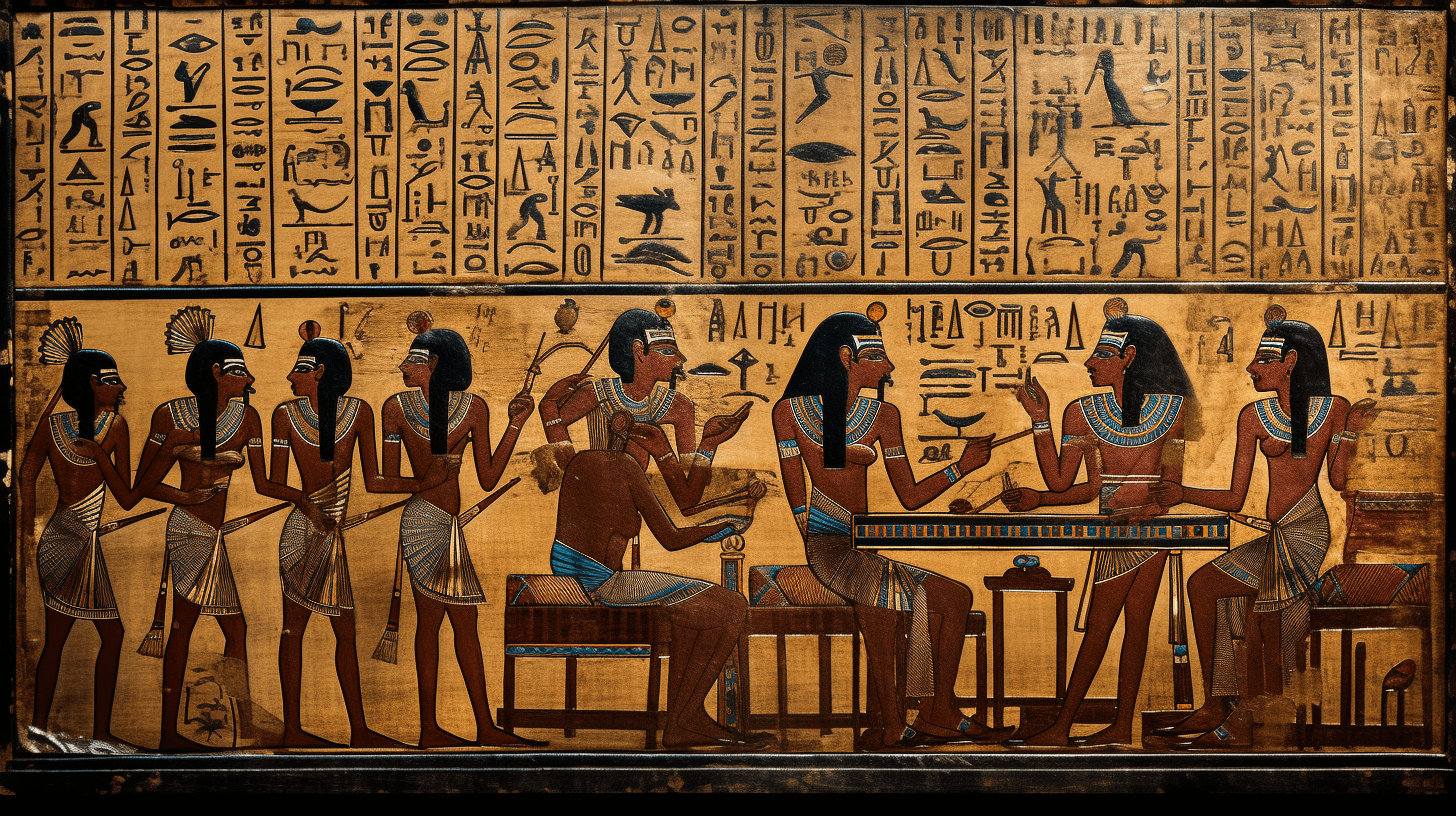
As you may already know, I am genuinely interested in ancient education and intrigued by the fact that some of the strategies and subjects we teach today might have been used and implemented in schools for hundreds or even thousands of years.
Today, I wanted to complete the triad I started a few weeks ago. I began by writing a post about education in Ancient Greece, then Ancient Rome, and today I wanted to finish by writing an entry about education in Ancient Egypt. This is particularly interesting to me, as I lived and worked in a school in Egypt myself.

In the history of ancient civilizations, Ancient Egypt stands out as a symbol of human creativity. Beyond the famous pyramids and the Sphinx, the ancient Egyptians were not just builders of structures but also cultivators of minds.
Temples of Wisdom
In Ancient Egypt, education was held in very high regard and was strongly associated with religious elites and the upper social classes. For this reason, religion could be understood as something sacred. Not all Egyptians received a formal education, and those who did were trained to hold positions within the priestly class, which held great influence and power.
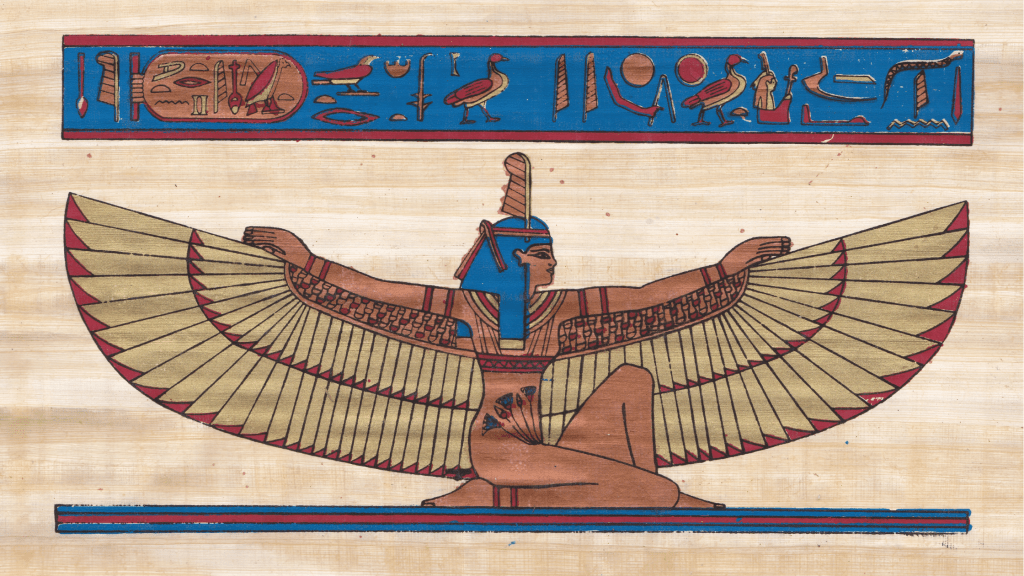
Ma’at, the goddess of wisdom, justice, harmony, and truth, was depicted as a young woman with wings, or at least with an ostrich feather on her head. Ma’at also played a crucial role in the weighing of the heart ceremony, in which the heart of the deceased (according to Egyptian mythology) was weighed and compared to the weight of an ostrich feather. This goddess embodied the moral and ethical principles that all ancient Egyptians were expected to follow and demonstrate in their daily habits and routines. They had to act with honor and truth.
It was this ethical aspect that led to the creation of elite classes or groups (called sesh), who were intellectuals, scribes, and bureaucrats. Because of this, Ma’at was the goddess associated with education, as schools were the places where scribes were trained.
The temples held immense significance in the religious, social, and political aspects of their civilization. These architectural marvels served as sacred spaces dedicated to the worship of various deities, with each temple dedicated to a specific god or goddess. The most prominent among these was the Temple of Karnak in Luxor, dedicated to the god Amun, a focal point of religious activities and ceremonies.
As we’ve mentioned, temples were not only places of worship but also served as centres for economic and administrative activities. They played a crucial role in the agricultural cycle, with many temples owning vast estates and agricultural lands. The produce from these lands, along with offerings from the worshippers, provided sustenance for the temple priests and personnel. Moreover, temples served as hubs for educational and cultural activities, where scribes, priests, and scholars gathered to impart knowledge, record historical events, and conduct rituals.
The temples also played a pivotal role in maintaining cosmic order, or Ma’at, a fundamental concept in ancient Egyptian religion. Through rituals and ceremonies, the priests believed they could maintain the balance between the earthly realm and the divine, ensuring the prosperity and well-being of the kingdom. Additionally, the temples were intricately linked to the pharaoh’s authority, as they were often responsible for legitimising the ruler’s divine connection through rituals and ceremonies conducted within these sacred precincts. In essence, ancient Egyptian temples were multi-faceted institutions that blended religious, economic, political, and cultural elements, making them central to the fabric of Egyptian society.
Famous Ancient Egyptian Teachers: The Scribes
At the heart of spreading knowledge were the scribes — respected figures who acted as both teachers and guardians of wisdom. These knowledgeable individuals played a crucial role in guiding the upcoming generation of scribes and administrators. Imhotep, the versatile mind behind the Step Pyramid, is a symbolic figure, honoured not just for his architectural achievements but also for his impact on medicine and education.

Scribes held a position of great importance and prestige within society. They were highly educated and skilled in the art of writing, possessing the ability to record and interpret the hieroglyphic script. Scribes were also responsible for maintaining records, documenting religious texts, and recording administrative and legal proceedings. Their expertise extended to various materials, including papyrus, ostraca (pottery shards), and even tomb walls.
Becoming a scribe required years of rigorous training, usually starting in childhood. Scribes attended specialised schools where they learned to master the intricate hieroglyphic characters and acquired knowledge in mathematics, astronomy, and other subjects essential for their roles. Writing was considered a sacred art, and scribes played a crucial role in preserving the cultural and religious heritage of ancient Egypt.
Scribes were employed in various capacities, serving in the administration of the government, temples, and households. They played pivotal roles in drafting legal documents, recording census data, and documenting religious rituals. Their meticulous record-keeping also extended to monumental inscriptions, contributing to the construction of historical narratives and commemorating the achievements of pharaohs and other prominent individuals. The significance of scribes in ancient Egyptian society cannot be overstated, as they were the intellectual and bureaucratic elite who played a crucial role in maintaining the stability and continuity of the civilization through the written word.
Institutions: The Per Ankh
Education extended beyond formal institutions, touching every facet of existence. The Per Ankh, linked to temples, acted as a hub for learning. Scribes and priests participated in intellectual endeavours, safeguarding and passing on knowledge. These Houses of Life resembled contemporary universities, cultivating an environment of scholarly exploration and discussion.
The term Per Ankh in ancient Egyptian culture translates to “House of Life” and held a diverse significance within the civilization. It was commonly used to refer to various institutions, each serving a unique purpose but united by the overarching theme of knowledge, wisdom, and the preservation of life’s vital aspects.
One primary use of Per Ankh was to designate scriptoria or libraries associated with temples and centres of learning. These establishments were crucial hubs for intellectual activities, housing an extensive collection of scrolls, papyri, and other written materials. The House of Life served as a repository for religious texts, medical treatises, and scientific knowledge. Scholars and scribes gathered in these centres to transcribe, study, and disseminate ancient wisdom, contributing to the preservation and transmission of knowledge across generations.
In a broader sense, Per Ankh also symbolised the concept of eternal life and the pursuit of spiritual wisdom. The Egyptians believed in the continuity of existence beyond the physical realm, and the House of Life became a metaphorical space where individuals sought not only intellectual enlightenment but also a deeper understanding of the afterlife and the divine. The term encapsulated the interrelation of knowledge, spirituality, and the enduring quest for a meaningful existence in both the earthly and divine realms within the rich tapestry of ancient Egyptian culture.
Papyrus Scrolls and Ostraca
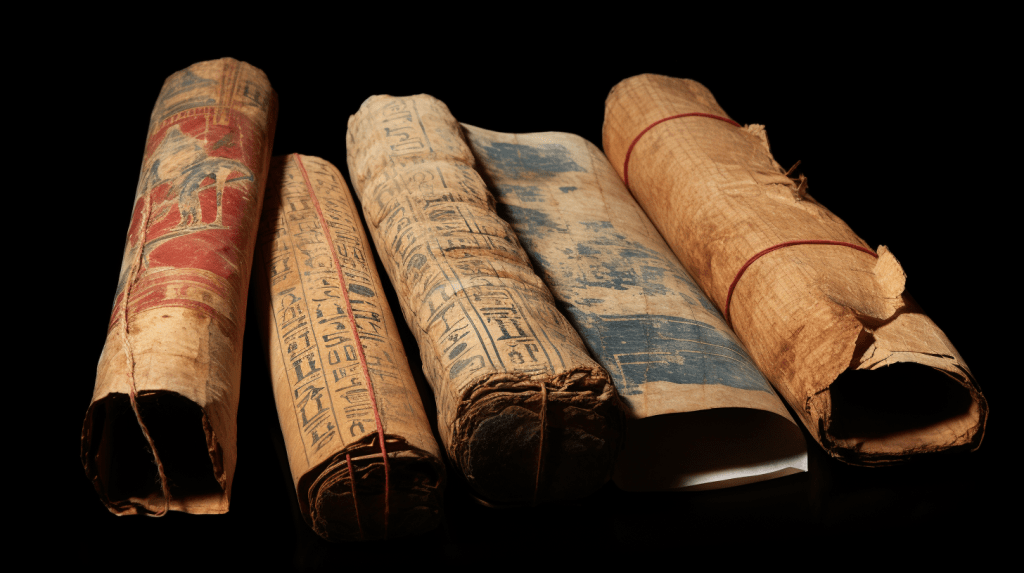
In Ancient Egypt, an innovative approach to teaching involved the use of writing materials. Scribes, driven by a desire for lasting knowledge, documented lessons on papyrus scrolls—similar to ancient textbooks—playing a crucial role in preserving information. Furthermore, ostraca, fragments of pottery, served for informal notes and sketches, fostering a more interactive and participatory style of learning.
Papyrus scrolls and ostraca were two significant writing materials in ancient Egypt, each with distinct roles in preserving and sharing information. Papyrus, made from the papyrus plant, was versatile and used for creating easily stored scrolls. The process involved slicing the plant into strips, arranging them in layers, and pressing them to form sheets. These sheets were joined to create scrolls that recorded religious texts, administrative documents, literature, and various records. The House of Life (Per Ankh), temples, and royal archives housed extensive collections of papyrus scrolls, documenting Egypt’s cultural, religious, and historical heritage.
Ostraca, on the other hand, were broken pieces of pottery or limestone flakes used for informal and disposable writing. They were handy for quick notes, drafts, sketches, and everyday records. Ostraca offer insights into the daily lives of ordinary Egyptians, providing a spontaneous look into their concerns, activities, and doodles. Abundantly available and reusable, ostraca were cost-effective for recording information in administrative offices, workshops, and tombs. They offer a diverse range of textual and visual information, complementing the formal records on papyrus scrolls. Together, papyrus scrolls and ostraca depict the wide spectrum of written communication in ancient Egypt, from monumental religious texts to the everyday details of ordinary life.
Impact in Today’s Education: The Ankh of Legacy
The educational practices of ancient Egypt have influenced modern education in several ways. One significant aspect is the focus on literacy and writing skills. In ancient Egypt, training scribes and establishing scriptoria in temples underscored the importance of literacy for the elite and those in administrative and religious roles. Today, global education maintains a foundational emphasis on developing strong reading and writing abilities.

Furthermore, the structured and formalised nature of ancient Egyptian education parallels contemporary educational systems. Ancient Egypt had a well-defined curriculum covering mathematics, astronomy, medicine, and religious studies. Similarly, modern education aims to provide a comprehensive and structured curriculum, ensuring a well-rounded education.
The concept of lifelong learning, deeply embedded in ancient Egyptian culture, resonates in today’s educational philosophy. In ancient Egypt, education was a continuous, lifelong process, emphasising the ongoing pursuit of knowledge. This aligns with the contemporary understanding that education extends beyond formal schooling, involving continuous learning and skill development.
In summary, the impact of ancient Egyptian education on today’s education is evident in the emphasis on literacy, the structured curriculum, and the enduring concept of lifelong learning. These principles, rooted in the educational practices of ancient Egypt, have contributed to shaping the foundations of modern educational systems worldwide.
Bibliography
Breasted, J. H. (1906). Ancient Records of Egypt: Historical Documents from the Earliest Times to the Persian Conquest. University of Chicago Press.
Kemp, B. J. (1991). Ancient Egypt: Anatomy of a Civilization. Routledge.
Lloyd, A. B. (2010). Ancient Egypt: State and Society. Oxford University Press.
Parkinson, R. B. (1991). Voices from Ancient Egypt: An Anthology of Middle Kingdom Writings. University of Oklahoma Press.
Quirke, S. (2001). The Cult of Ra: Sun-Worship in Ancient Egypt. Thames & Hudson.
 Mr Sanchez Tutoring
boooooooooooooooooooooooooooooooooooooooooooooooooooooooooooooooooooooooooooooooooooooooooooooooooooooooooooooooooooooooooooooooooooooooooooooooooooooooooooooooooooooooooooooooooooooooooooooooooooooooooooooooooooooooooooooooooooooooooooooooooooooooooooooooooooooooooooooooooooooooooooooooooooooooooooooooooooooooooooooooooooooooooooooooooooooooooooooooooooooooooooooooooooooooooooooooooooooooooooooooooooooooooooooooooooooooooooooooooooooooooooooooooooooooooooooooooooooooooooooooooooooooooooooooo!!!!!!!!!!!!!!!!!!!!!!!!!!!!!!!!!!!!!!!!!!!!!!!!!!!!!!!!!!!!!!!!!!!!!!!!!!!!!!!!!!!!!!!!!!!!!!!!!!!!!!!!!!!!!!!!!!!!!!!!!!!!!!!!!!!!!!!!!!!!!!!!!!!!!!!!!!!!!!!!!!!!!!!!!!!!!!!!!!!!!!!!!!!!!!!!!!!!!!!!!!!!!!!!!!!!!!!!!!!!!!!!!!!!!!!!!!!!!!!!!!!!!!!!!!!!!!!!!!!!!!!!!!!!!!!!!!!!!!!!
LikeLike
hi I’m iron man
LikeLike