
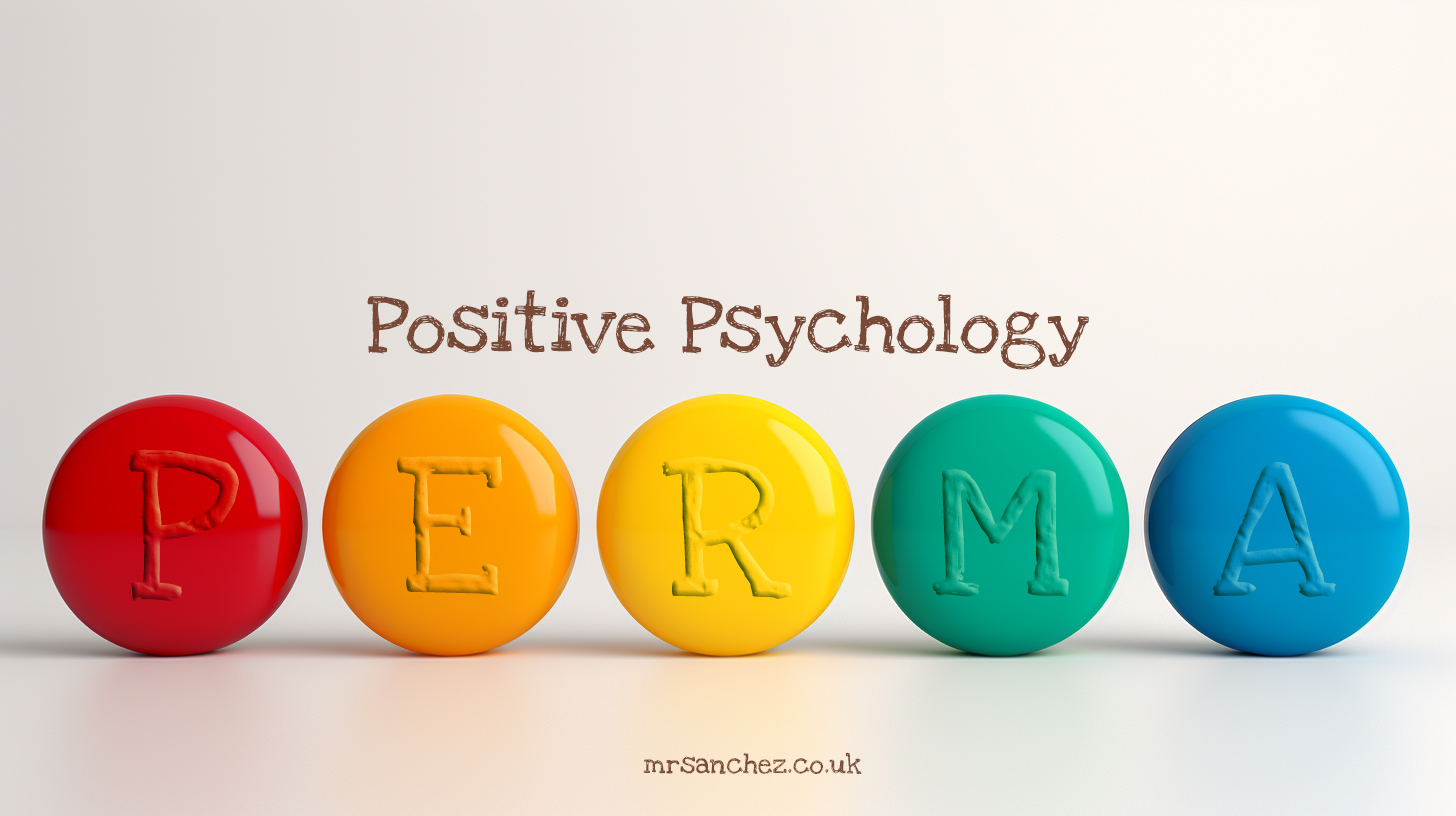
In the past few months, I’ve been really into positive psychology, especially digging into the ideas of Dr. Martin Seligman. First, I explored his take on 24-character strengths that shape who we are. Now, I’m curious about his PERMA model, which is all about wellbeing, inspired by Abraham Maslow’s views. Dr. Seligman talked about it in an interview, sharing some cool insights into how people can thrive.
What is PERMA?
PERMA is an acronym for a great life, spelling out five things that people naturally gravitate toward when they’re not dealing with tough times:
P-ositive Emotion/Feeling Good: It’s all about happiness, capturing those moments that make life a little brighter and more joyful.
E-ngagement/Getting in the Zone: Imagine being so into something, like when you’re lost in a great song. That’s what we’re talking about—full-on focus and being totally absorbed in what you’re doing.
R-elationships/Building Great Bonds: Think of this as the glue of social life, holding together connections with friends, family, and anyone who brings support, love, and a sense of being valued.
Me-aning and Purpose: It’s about reaching for something bigger than just yourself, giving your life that extra dash of importance.
A-ccomplishments/Achieving Goals: Mastering things, hitting those goals, and keeping yourself motivated all add up to a life filled with pride and a sense of accomplishment.
According to Dr. Seligman, having PERMA in your life is like holding an all-access VIP pass to a thriving existence—where each day is packed with good vibes and an overall feeling of wellbeing.
PERMA in schools

Schools, traditionally focused on imparting knowledge, also bear the responsibility of nurturing wellbeing. According to Dr. Seligman, schools should aim not only for academic learning but also for building wellbeing, measured through the lens of PERMA. The positive emotion, engagement, quality relationships, and meaning all contribute to academic accomplishment. The relationship is bidirectional—increasing PERMA enhances learning, and improved learning contributes to increased PERMA.
What can teachers do?
Dr. Seligman’s theory provides a plan for us, teachers, to not only measure but actively enhance PERMA in our classrooms, creating an environment that contributes to both learning and holistic development. Here are some concrete ideas and activities that we can integrate into our pedagogies:
POSITIVE EMOTION (P):
Morning Gratitude Rituals: Begin the day with a brief gratitude session where students express one thing they are thankful for. This sets a positive tone for the day.
Emotion Check-ins: Implement regular emotion check-ins to encourage students to identify and share their feelings. This cultivates emotional intelligence and a supportive classroom culture.
When I was a primary teacher, I used to welcome pupils individually and give them a handshake. I used to have a short small talk chat with each of them, which allowed me to identify those who were out of sorts, and then address anything that had happened to them and help them regulate their emotions to start the day with good energy.

ENGAGEMENT (E):
Project-Based Learning: Design projects that align with students’ interests and allow for creativity and self-expression. This fosters deep engagement and a sense of accomplishment.
Incorporate Interactive Technologies: Integrate educational technologies that encourage active participation, collaboration, and interaction, enhancing overall engagement.
Now that I am an Early Years teacher, this is at the core of my practice. However, working in a large team means that themes/topics are selected during our planning time; this sometimes means that we choose topics we think children are interested in, but we cannot know for sure. The key here is to adjust planning and modify topics for the following years.
This is also a strategy you can implement even as a Primary or Secondary teacher. It’s worth talking to the children to find out their interests and then using these in your lessons. I have included Minecraft in my explanations so many times in the past because children were interested in that game. I learned more about it, played the game to understand it, and then used terminology and ideas from Minecraft in my own lessons. The children were incredibly engaged!
RELATIONSHIPS (R):
Circle Time: Dedicate time for circle sessions where students and teachers can share experiences, creating a sense of community and fostering positive relationships.
Buddy Systems: Establish a buddy system where students pair up to support each other academically and emotionally, building strong peer relationships.
Some of the things that I have done in the past include nurturing a sense of belonging by creating a tribal classroom. This can be achieved by spending time creating flags that represent the class, chants, or songs that talk about how good we are, etc. Belonging is key here; all children need to feel they belong in the classroom, even those who struggle with controlling their emotions (actually, these are the pupils who need this the most). This doesn’t mean that you have to overlook when they break the rules or make the wrong decisions, but you need a consistent restorative approach that holds the child accountable for their behaviour without punishing them just as an action/reaction strategy. Every time a restorative talk has taken place, it is important that children feel they start with a clean slate again.

MEANING (M):
Plan lessons and activities that replicate real-world contexts: It’s commonly known that maths is better learnt when starting with concrete resources, then pictorial and finally, when the children have mastered the previous steps, abstract (numerals, symbols, etc.)
The same can apply to any other learning. If children are exposed to real-world experiences, their learning will be more meaningful, and it is more likely to stick.
Community Projects: If possible, engage children in community projects, allowing them to see the impact of their actions and creating that sense of contribution and meaning that will turn that learning into an everlasting memory.
I love taking my class outside, reading on the field, and exploring the school grounds to make the most of these experiences to enhance learning. Obviously, educational trips and visits are very important, but money can be a problem in some schools; so make sure you plan trips to places that enhance children’s learning, not just as a treat.

ACCOMPLISHMENTS (A):
Goal-Setting Exercises: Guide children in setting realistic and achievable goals, both academically and personally. Don’t forget to celebrate victories (regardless of how small they are) to inculcate a sense of accomplishment.
Student Presentations: Let children lead presentations where they showcase their achievements and discuss their learning journey. You will be promoting self-reflection and accomplishment, and this can be done in your lessons, class or whole school assemblies.
I am someone who finds it difficult to finish the things I start. One strategy that helps me is breaking broad goals into smaller steps and celebrating each time I achieve them.
Some children find it overwhelming to write an extended piece, so I divide these tasks over different days. On the first day, they write the introduction; the next day, the following part, and so on. I make sure to congratulate all when they accomplish these mini goals, especially those I know struggle more with these tasks.
Accomplishments must be adapted to individuals; we cannot expect the same from completely different people. Each of our students needs to understand what we expect from them without feeling that they are being given an easier task. Once again, knowing them and talking to them is essential in ensuring this.
CONTINUOUS ENHANCEMENT:
Pupils’ Voice: Ask feedback from children about their classroom experience, including aspects related to PERMA. This will provide you with valuable insights you could then use to make adjustments.
Professional Development on Positive Psychology: If you’re a headteacher (or you’re in a senior role), I recommend you to offer your teachers (and support staff) workshops or training sessions on positive psychology. You can incorporate these within the school culture by training them so that they integrate these concepts seamlessly into their teaching methods.
INTEGRATED APPROACHES:
Mindfulness: Brief meditation sessions, or breathing exercises, can help students stay present, reduce stress, and enhance both: positivity and engagement.
Themed Weeks: Organise themed weeks focused on each element of PERMA, allowing time for exploration and activities related to positive emotion, engagement, relationships, meaning, and accomplishment.
PERMA is a tool that we, as teachers, can use not just to enhance academic success but also the overall development of students. It brings a more holistic approach to the classroom and empowers us to infuse creativity into our methods, allowing us to customise strategies that fit the unique dynamics of our classrooms. It is more of a concept than a pedagogy, and you can explore various ideas or schemes to help children grow by developing their 24-character strengths. This, in turn, will assist them in leading a happier life and, hopefully, a more successful career and future.
 Mr Sanchez Tutoring
One thought on “Positive Psychology: The PERMA Model”