

I have recently been reading a lot about positive psychology and the 24 character strengths that shape who we are. I have been contemplating ideas to cultivate some of these strengths in my class. Last week, I wrote about creativity and ways to enhance it in children. This week, I want to continue in the ‘Wisdom’ category and share 10 ideas to help our pupils develop their curiosity. These are concepts that can be implemented both at school and at home.
What is curiosity?
Curiosity is a quality that expresses when you want to know, explore, and learn about new things. It’s a feeling that makes you ask questions and wonder about the world around you. Some people have great curiosity that shows in their desire to learn and know about lots of things. However, other people have a less strong curiosity that they focus on one topic or specific things.
Social pressures can suppress our feelings of curiosity. Our gender-constructed world makes girls and boys want to learn and know about different things, but this is just a consequence of those social pressures.
Another factor that can diminish curiosity is our ego. Thinking we know everything already can stop us from wanting to learn more.
How can parents support the development of curiosity at home?
1. REDUCED SCREEN TIME
Research has proven that children and young people who spend more time in front of a screen are associated with a lack of curiosity and lower well-being. Additionally, children who were exposed to screens earlier showed lower cognitive development and poorer academic performance. In conclusion, children who spend time on screens are less curious, find it more difficult to concentrate, and are more likely to struggle in developing their social skills.
Some alternatives to screen time are:
Reading. An old times activity, which is a healthier entertainment alternative to screens. When children listen to adults read books, they develop their communication and language skills, learn vocabulary, and perform better at school.
Arts and crafts. While these activities primarily focus on children’s creativity rather than curiosity, arts and crafts can support children’s curiosity when done with adults who encourage them to use new materials and create things outside their comfort zone. Children often exhibit repetitive behaviours when creating drawings or other pieces of art, stemming from their comfort zone. With support, they can overcome the fear of the unknown in art. Additionally, they will develop their organizational and fine motor skills.
Collecting. This hobby often begins in childhood and persists into adulthood. The human inclination for collecting may trace its roots thousands of years ago when people were hunter-gatherers; it’s innate within us. Children can nurture their interests and passions while simultaneously learning to be tidy and organised. Collecting helps in acquiring new knowledge and increases the desire to obtain more, both intrinsic aspects of curiosity.

2. UNSTRUCTURED PLAYTIME
Many parents restrict their children from playing with cushions, chairs, and other furniture in the living room. Some even discourage jumping on beds. However, unstructured play is crucial for children to explore and create without the need for rules or instructions, fostering their imagination—a key aspect of curiosity. Encourage your children to build forts with cushions, blankets, chairs, and the sofa. Let them build their tents using whatever materials are available at home. Embrace the messiness, but also teach them to tidy up once they’re finished.
3. SUPPORT PURSUIT OF PASSION
In the same way as with collections, children enhance their curiosity by exploring their passions. Listen to them and discover their interests. Show excitement when they share facts about the things they love. Gift them books, magazines, puzzles, and anything related to their passions. Create drawings about those same interests with your children.
Passionate pursuits become the fuel that propels them into the heart of exploration.
4. QUESTIONING ENVIRONMENT
Creating a home where it’s great to ask questions can really boost your child’s curiosity. Encourage them to ask “why” and “how” when they come across things that interest them. When they wonder about something, explore it together. Instead of giving quick answers, help them think carefully. Ask more questions like, “What do you think?” or “How do you think that works?” This not only makes their curiosity stronger but also helps them become better at thinking critically.
In this setting, curiosity becomes a way to begin conversations. Talk about different things, and when you’re not sure about something, show them that it’s fine not to know everything. This helps them understand that curiosity is like a journey, not just about getting answers but enjoying the adventure of exploring and discovering. The questioning atmosphere at home sets the stage for their future learning journeys.
5. DIVERSE EXPERIENCES
Curiosity flourishes when children explore different environments. Throughout my years as an educator, I’ve observed that children who visit new places during weekends or breaks return to school excited to share their experiences with me. Typically, these children exhibit higher academic performance and better mental health and well-being.
Visiting museums, new venues, parks, and other diverse settings plays a pivotal role in enhancing children’s curiosity. These experiences are like dynamic classrooms where learning extends beyond textbooks and structured lessons. Museums, for instance, are full of knowledge, offering a hands-on approach to history, science, and art. Children can interact with exhibits, ask questions, and see the relevance of what they learn in school to the real world.
Exploring new venues provides children with a rich tapestry of experiences. Whether it’s a cultural festival, a community event, or a unique gathering, each occasion becomes a chance for them to encounter different perspectives, traditions, and ways of life. This exposure nurtures an open-minded curiosity about the world and its diversity.

Parks, with their open spaces and natural elements, offer a unique setting for exploration. Children engage in unstructured play, discovering the wonders of the outdoors. They might observe insects, collect leaves, or simply marvel at the vastness of the sky. These encounters with nature stimulate a profound sense of curiosity about the environment, helping children understand how living things are connected.
Moreover, exposure to various settings cultivates adaptability. Children learn to navigate new spaces, understand different rules and expectations, and interact with a diverse range of people. This adaptability is a crucial component of curiosity, as it encourages a mindset that welcomes novelty and change.
How can teachers support the development of curiosity in the classroom?
1. CREATE A QUESTION-FRIENDLY CLASSROOM.
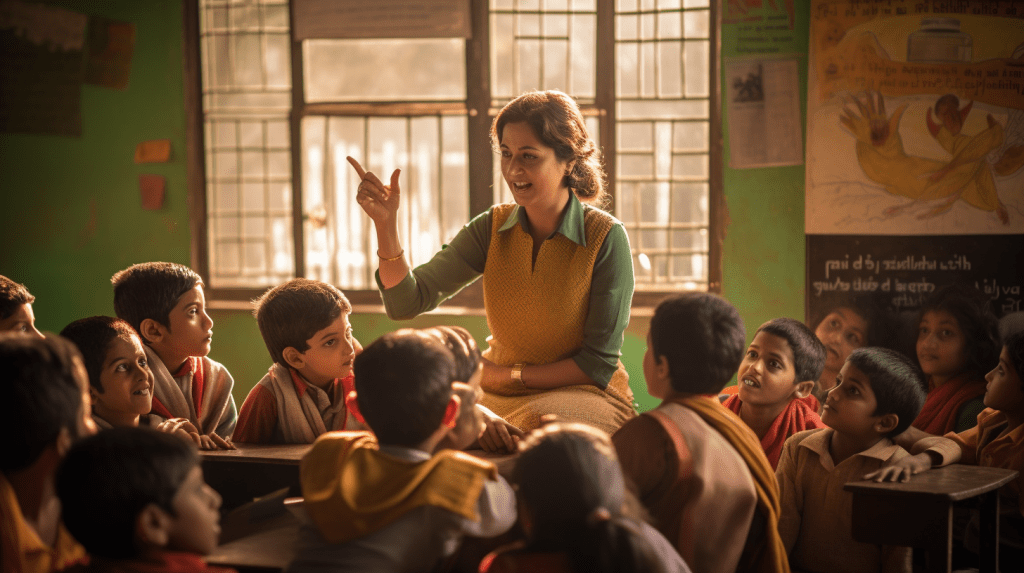
In the classroom, curiosity is what keeps children engaged. Making a space where questions are not just allowed but celebrated turns learning into an exciting journey. It means giving students the power to ask, explore, and actively seek understanding. In this setting, questions aren’t just inquiries; they’re like sparks that light up curiosity, helping students explore more deeply and meaningfully.
In order to achieve this, you’ll need to shift your mindset, if you haven’t already. This will be a child-centred classroom where their voices are heard more often than the teacher’s. Their questions aren’t simply answered but discussed. Teachers don’t just present absolute truths; they assist children in finding them, helping in the development of not only curiosity but also critical thinking.
2. INTERACTIVE LEARNING
The traditional classroom becomes a curiosity hub when interactive learning becomes the focus. Activities that involve children, encourage exploration, and invite active participation plant the seeds of curiosity. It’s about crafting an engaging learning experience that captures the inquisitive mind.
Interactive Learning Stations. One great way to spark curiosity in schools is by using interactive learning stations. These stations can be in classrooms or specific areas, each dedicated to a particular topic. For example, a science station might have experiments and models, while a history station could include artefacts and timelines. The goal is to offer hands-on experiences that go beyond traditional teaching methods, motivating students to explore and question on their own.
Project-Based Learning Initiatives. Project-based learning is a great way to boost curiosity and build important skills. When children work on projects that involve investigation, research, and creative problem-solving, they dive into topics that interest them. Whether it’s a science fair project, historical research, or a community outreach initiative, projects make students feel connected and curious. This approach not only helps them understand the subject better but also teaches crucial skills like teamwork, critical thinking, and effective communication.
Interactive Technology Integration. Using modern technology, like interactive tools and apps, can transform how students learn. Incorporating virtual simulations, educational games, and interactive presentations makes complex ideas more interesting. For example, exploring historical landmarks in virtual reality or conducting science experiments online adds a new layer to learning. Educators can connect with students’ curiosity by making technology a key part of the curriculum. We cannot overlook that the new generations are naturally connected with these technologies, and we must bridge traditional subjects with contemporary learning methods.

3. INTEGRATE REAL-WORLD EXPLORATION
Introducing the real world to the classroom broadens curiosity. Field trips, guest speakers, and applying knowledge in real-world situations connect theory with practice. In these hands-on experiences, curiosity gains real-world meaning, turning abstract ideas into tangible wonders.
Whether you organise a history workshop for your class or a science day, or take your class on an educational trip, these experiences are often more remarkable than our ‘normal’ teaching. It is like my idea number 5 for parents; children flourish by visiting new settings or having totally different experiences.
4. COLLABORATIVE DISCOVERY
Curiosity ignites when minds come together. Collaborative projects, group discussions, and interactive activities that prompt students to explore collectively build a shared sense of curiosity.
Here are a couple of examples:
Storytelling Extravaganza. Organise a collaborative storytelling project where each child contributes to creating a unique and imaginative story. Begin with a simple story starter or theme and let each child add a sentence or a paragraph to build on the narrative. This not only enhances their creative writing skills but also sparks curiosity about the diverse ideas and perspectives of their peers. Once the story is complete, celebrate by having the students illustrate it together or even act it out as a mini play.
You will probably need to model this for children, but once they grasp the concept, they’ll find this idea very funny and enjoyable.
Mini Science Fair. Transform the classroom into a mini science fair where small groups of children work on simple science experiments. Each group can explore a different scientific concept, conduct experiments, and present their findings to the class. This collaborative approach not only encourages teamwork but also allows students to witness a variety of scientific phenomena. Additionally, children will be practicing their oracy skills when they explain what they’ve done.
References:
Dewey, J. (1916): Democracy and Education. Free Press.
Loewenstein, G. (1994): The Psychology of Curiosity: A Review and Reinterpretation. Psychological Bulletin.
 Mr Sanchez Tutoring