

I don’t know about you, but I remember with clarity how I learned to write. My teacher, Pilar, would introduce the letters gradually as characters of a story. This was long before phonics started; and it was in Spain, where there was, and still there is, no phonics needed.
I remember how she presented the letters to us and talked about the relationships between them and the sounds they made together. She taught some grammar rules by saying, ‘Letter g and letter e and i don’t get along; they always need u to make their sound’ (this is a rule in Spanish).
The reason why I share this with you is that my teacher taught us well, and it was meaningful learning. We enjoyed.
Nowadays, teaching writing is, perhaps, too chaotic. There is no time to teach it properly, and we either neglect letter formation, grammar, or sentence structure. Phonics is the major priority in Reception and Year 1 because there is the bloody Phonics Screening Check at the end of Year 1. We seem to teach depending on standardised tests, forgetting that teaching otherwise would result in more meaningful learning; and I’m sure it will result in better results as well.
Anyway, today I wanted to share with you 5 ideas you can implement in your classroom or at home for children to start writing at the age of 4 or 5 years old. Most of the activities focus on letter formation, and they have a multisensory approach.
I hope you can make writing fun, introducing these activities after presenting the letters to the children and teaching them the sounds they make (Phonics) and the relationships between them.
Don’t hesitate to share your own ideas with me, either in the comment section below or on the ‘Contact’ section.
SENSORY LETTER TRACING
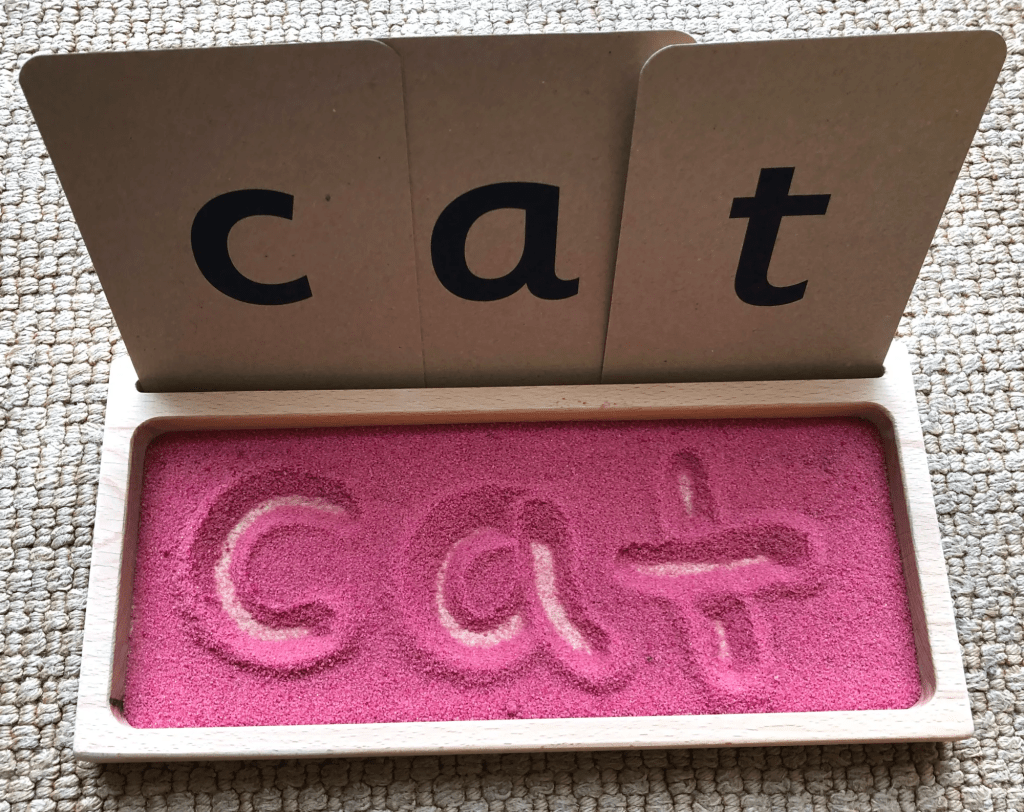
Materials: Shallow tray, sand, or salt.
Allow your young writers to trace letters in a sensory tray. Feeling the texture helps reinforce the shape of each letter.
If you’re at home, ask about the letter/s your child learned at school and assist them in forming it correctly—start and finish at the right places and trace it in the correct direction.
Encourage your child to experience the texture of the sand or salt.
This activity promotes muscle memory and enhances gross motor skills. It’s important to correct misconceptions regularly so that they internalise the letter formation correctly. Ignoring misconceptions may lead to the child forming letters incorrectly, making it challenging to unlearn later.
WATER PAINTING
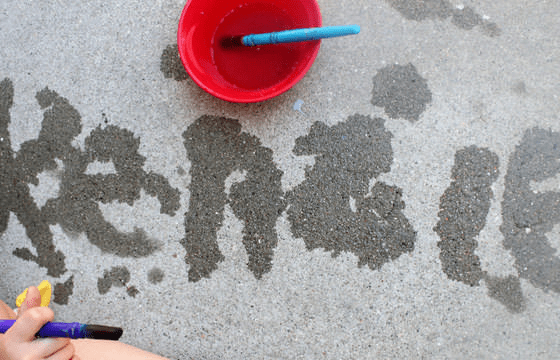
Materials: Paintbrush, water, outdoor pavement.
Take the learning outside! Allow children to ‘paint’ letters on the pavement using water. It’s a mess-free adventure.
Similar to Sensory Letter Tracing, this outdoor activity supports muscle memory and improves gross motor skills. It’s essentially the same idea but outdoors and using different materials. Children usually love this activity, but, again, it’s important for an adult to be present, guiding and correcting them to help internalize the correct letter formation. Afterward, you can let them explore and create their own marks with water.
PLAYDOUGH PHONICS
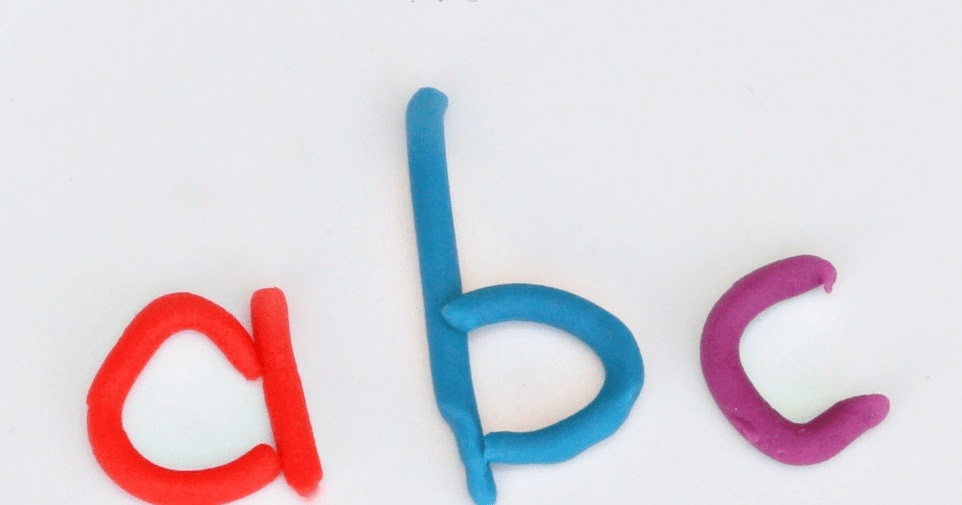
Materials: Playdough.
Mould playdough into letters while discussing the sounds they make. It’s a hands-on way to connect shapes and sounds.
This activity is different from the previous ones. It develops fine motor skills and is not a writing activity per se. This is a fun activity because children love playdough and encourages letter recognition more than formation. It is recommended to play this activity when your child has not yet secured their letter recognition, and it would be a game to play before the previous activities.
Anyways, I hope your children enjoy it and learn the letters while playing with playdough.
NATURE WRITING
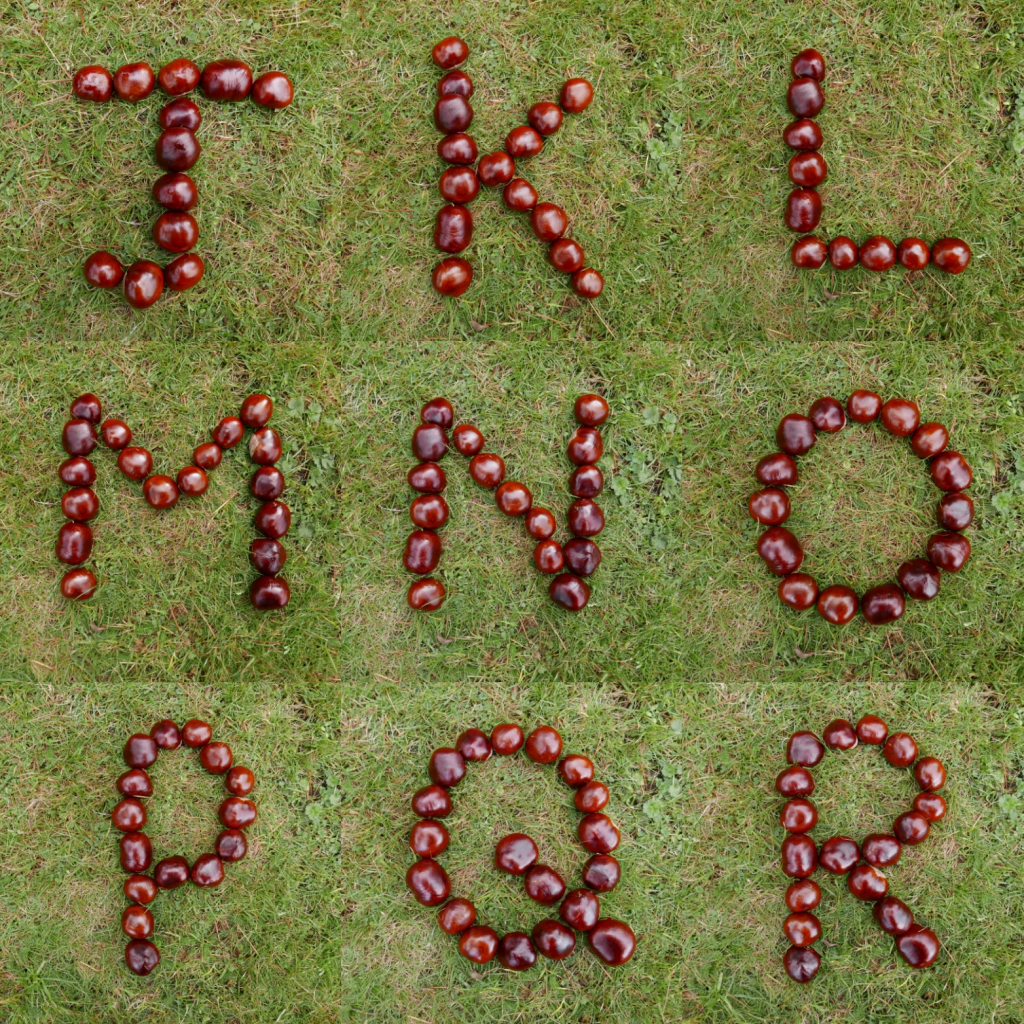
Materials: Sticks, leaves, outdoor space.
Take your child or the class outside. Children can use natural materials to form letters and even create short words.
This activity may target different skills depending on the materials the children use. If they use leaves or stones to make the letters, then they’ll be practicing their letter recognition. If, instead, they use long sticks to make marks on the ground, then they’ll be practicing letter formation and enhancing their gross motor skills. Encourage your child to use the materials you want to develop the skill they mostly need. Again, it is important for this to be successful to spend some time with the child correcting misconceptions and assisting them if needed. It is always nice to learn in nature!”
MAGICAL MARK MAKING
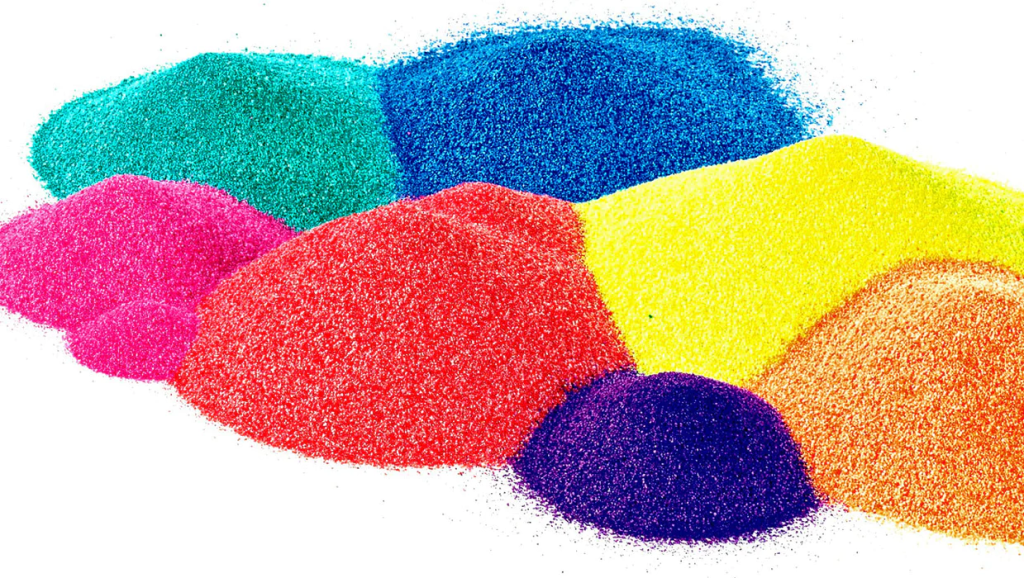
Materials: Coloured sand, glue, black paper.
Mix glue with coloured sand and let children create vibrant, textured letters on black paper.
What would be a list of activities for 4-year-olds without messy games?
This activity needs more preparation. Depending on the child’s level, you may need to pre-draw the letters (in bubble writing) for them to use glue and coloured sand. However, ideally, the child will use the glue themselves. Another idea is forming the letters with the coloured sand and then using the glue on top. Anyways, this is a fun activity that encourages letter recognition. I know, no writing again! But bear in mind that letter recognition is a step children must take before any writing, and many children will benefit from letter recognition activities like this.

In addition to these activities, you can provide your child with different art supplies (crayons, coloured pencils, gouache, paintbrushes…) to encourage them to form letters and learn to write. This would be a step ahead of the activities that I have shared with you, and they will be supporting children’s fine motor skills and letter formation. In a few months’ time, when they approach the end of their Reception year, these activities will be more appropriate and suitable. However, each child learns at a different pace, and there are many of them who are already ready to use pencils, paintbrushes, and other art supplies to form letters and write on paper.
I’d like to emphasise again that children need adult support and guidance to internalise the correct way of forming letters. It is very difficult to unlearn once muscle memory has developed, so I encourage you to spend time with your child and ensure they learn the correct way.
Anyways, I hope you find these ideas and advice helpful.
 Mr Sanchez Tutoring