

Yesterday was more than just a day of training at Hillingdon Primary School; it was an eye-opening journey into the wonders of outdoor learning, particularly in Reception. The session emphasised a simple yet profound philosophy: there’s no such thing as bad weather, only bad clothing. Rain or shine, children should be out there, exploring and learning through play.
The school’s outdoor spaces, carefully curated with limited resources, echoed the belief that meaningful learning opportunities don’t need clutter. Each area, from the mud kitchen to the water play zone, served a purpose. This intentional simplicity allows educators to craft experiences that spark curiosity and foster learning in a focused environment.

Weather as a Classroom: Embracing the Elements
The idea that weather changes are opportunities, not obstacles, resonated strongly. Children, especially in the formative years of Reception, can glean a plethora of knowledge from experiencing the changing weather. It’s not just about play; it’s about understanding the world around them in all its nuances.
The concept that stood out was the notion that outdoor activities need to align with indoor learning but not replicate it. The outdoor environment offers a unique canvas for learning, allowing for exploration and discovery in ways that the indoor setting might not.
Quality Interactions: Nurturing Communication and Language
The quality of interactions between adults and children was exemplary. Positioned at the child’s eye level, educators were strategically scattered across the playground. This wasn’t a passive observation; it was active engagement. No one was merely sitting on a bench; every interaction became a rich opportunity for communication, language development, and the introduction of new vocabulary.
Identifying Priorities: The Focused Approach
The school had a clear focus on gross motor skills, recognising it as a priority for their cohort. This priority wasn’t isolated but intricately woven into various activities and areas. From running and riding bikes to constructive play with large wooden blocks, gross motor skills were seamlessly embedded, ensuring a holistic approach to development.
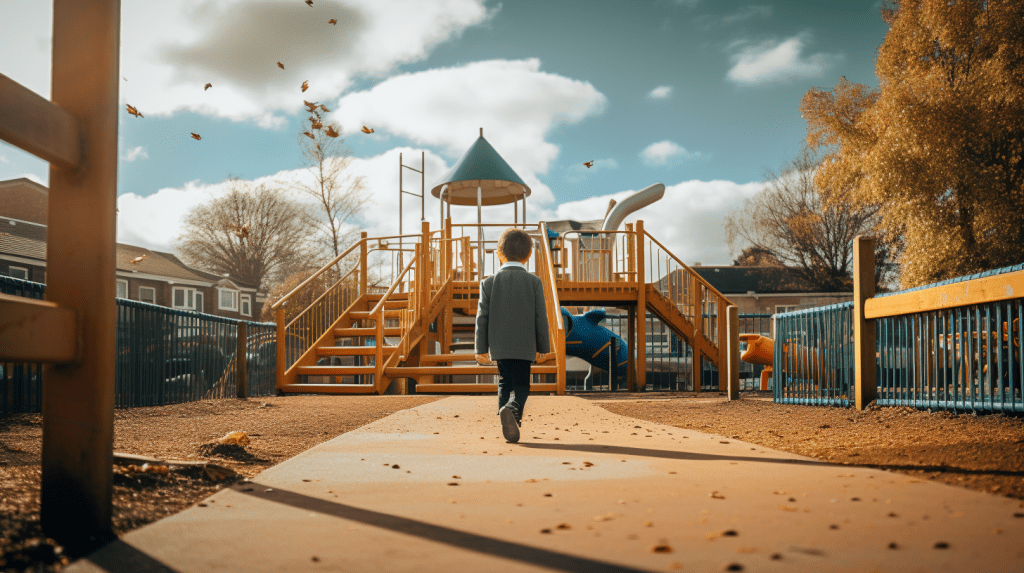
Nature Then and Now: A Shift in Perspectives
Reflecting on how children experience nature today compared to years past sparked intriguing discussions. The acknowledgment that the outdoor area is as vital for learning as the indoor space was a focal point. Often, outdoor spaces are overlooked, and this oversight can hinder the potential for valuable learning experiences.
Research Insights: The Educational Power of Outdoor Play
Research consistently supports the educational benefits of outdoor play. It enhances cognitive function, creativity, and problem-solving skills. Exposure to nature contributes to improved concentration and reduces symptoms of attention disorders. Physical activity in outdoor settings promotes health and well-being, fostering a positive attitude towards learning.
Concrete Activities for Outdoor Learning: Bridging Play and Education
- Nature Scavenger Hunt: Create lists of natural items for children to find, encouraging observation and exploration.
- Mud Kitchen Creations: Engage in messy, sensory play by allowing children to mix, measure, and create in a mud kitchen.
- Obstacle Course: Develop gross motor skills through an outdoor obstacle course using natural and safe materials.
- Story Stones: Use smooth stones as story prompts, encouraging children to create narratives inspired by nature.
- Outdoor Art Gallery: Transform an outdoor wall into an evolving art gallery, showcasing children’s creations inspired by the environment.
Closing Thoughts: Nurturing Young Minds through Outdoor Exploration
Today’s insights at Hillingdon Primary School have illuminated the transformative power of outdoor learning. Beyond the joy of play, the outdoors becomes a dynamic classroom where young minds flourish. As we continue our educational journeys, let’s carry this understanding: the world outside our classrooms is a boundless realm of discovery, waiting to be explored.
Bibliography:
- Chawla, L. (2015). Benefits of Nature Contact for Children. Journal of Planning Literature, 30(4), 433–452.
- Fjørtoft, I. (2004). Landscape as Playscape: The Effects of Natural Environments on Children’s Play and Motor Development. Children, Youth and Environments, 14(2), 21–44.
- Louv, R. (2008). Last Child in the Woods: Saving Our Children from Nature-Deficit Disorder. Algonquin Books.
- Lester, S., & Maudsley, M. (2006). Play, Naturally: A Review of Children’s Natural Play. Children, Youth and Environments, 16(2), 55–78.
 Mr Sanchez Tutoring