
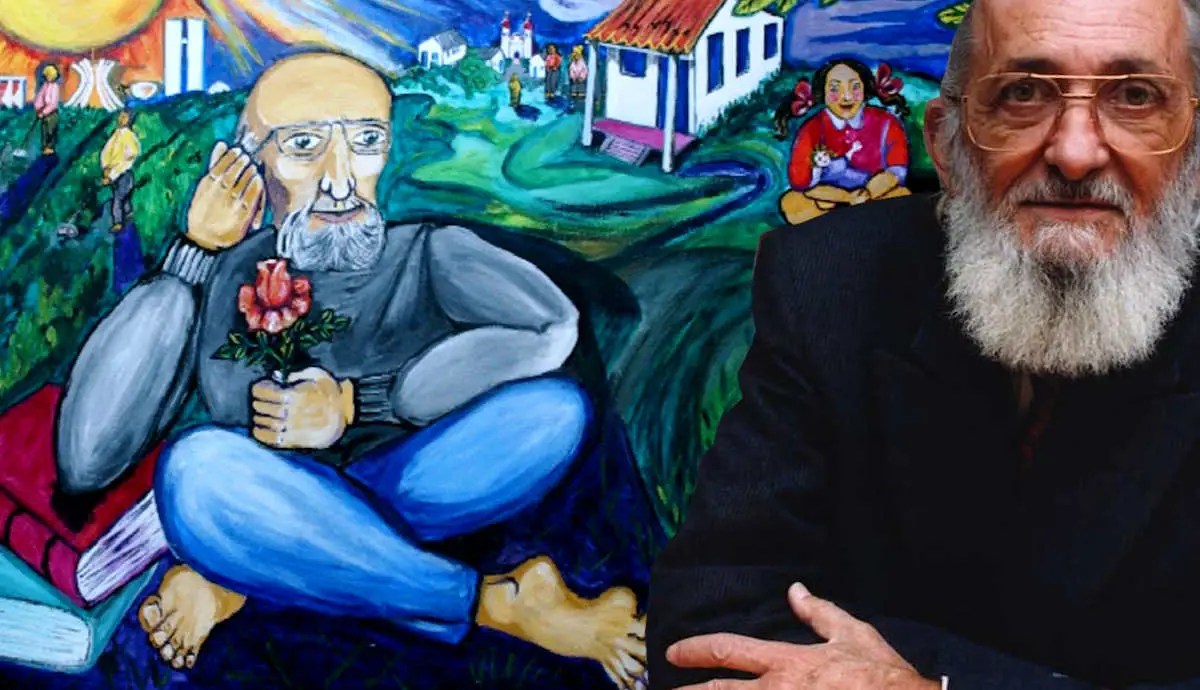
Paulo Freire was a Brazilian educator, philosopher, and scholar who is an icon in the world of education and pedagogy. His life and work have left an indelible mark on the way we perceive teaching and learning. In this post, I’ll briefly go through the life and research of Paulo Freire and explore how his educational theories can be implemented in today’s primary classrooms, fostering engaged and empowered young learners.
Born in 1921 in Recife, Brazil, Paulo Freire’s early life was marked by poverty and social injustice. These formative experiences ignited his passion for education as a tool for societal transformation. Freire studied law and philosophy, but it was his work as an adult literacy educator that catapulted him into the educational spotlight.
Freire’s Research and Pedagogical Contributions:
- Critical Pedagogy: Freire’s ground-breaking concept of “critical pedagogy” challenges traditional banking-style education, where teachers deposit knowledge into passive students. Instead, he advocated for a dialogic approach where educators and learners engage in a mutual process of questioning and critical thinking.
- Problem-Posing Education: Freire believed that education should encourage students to think critically about their world. Problem-posing education, as he termed it, involves presenting real-world issues and inviting students to analyse, question, and collectively seek solutions.
- Liberation Through Literacy: Freire’s work in adult literacy programs in Brazil highlighted the power of literacy as a tool for liberation. He saw literacy as a means for marginalised communities to articulate their experiences and collectively address social injustices.
- Praxis: Freire’s concept of “praxis” underscores the importance of action and reflection. He believed that learning should lead to meaningful action in the world. In the classroom, this translates to empowering students to apply their knowledge to create positive change.
Primary Classrooms:
Freire’s educational theories are not confined to adult education; they can be adapted for primary classrooms to empower young learners:
- Student-Centred Learning: Shift from teacher-centric to student-centric classrooms where students actively engage in discussions, ask questions, and explore topics of interest.
- Critical Thinking: Encourage students to think critically about issues that matter to them. Discuss age-appropriate real-world topics and invite them to voice their opinions and solutions.
- Hands-On Learning: Incorporate experiential learning, allowing students to learn through exploration and discovery. Field trips, experiments, and interactive projects can foster experiential learning.
- Community Engagement: Teach students about their local community and involve them in projects that address real community needs. This fosters a sense of civic responsibility.
- Inclusivity: Embrace diversity in the classroom and create an inclusive environment where all voices are valued and heard. Freire believed that education should be accessible to everyone (inclusion).
Paulo Freire’s legacy reminds us that education is not a one-way transfer of knowledge but a dynamic process of critical thinking and empowerment. In today’s primary classrooms, his theories can guide educators in nurturing engaged, thoughtful, and socially conscious young learners who are prepared to shape a brighter future.
Bibliography:
- Freire, P. (1970). Pedagogy of the Oppressed. Herder & Herder.
- Freire, P. (1998). Pedagogy of Freedom: Ethics, Democracy, and Civic Courage. Rowman & Littlefield.
- Macedo, D. (2006). Literacies of Power: What Americans Are Not Allowed to Know. Westview Press.
- Darder, A., Baltodano, M., & Torres, R. D. (Eds.). (2003). The Critical Pedagogy Reader. Routledge.
 Mr Sanchez Tutoring