

Numerical sensitivity, or the ability to understand and work with numbers, is an important skill that lays the foundation for mathematical development in children. Research has shown that children exhibit a remarkable sensitivity to numerical information from an early age, even before they receive formal instruction in mathematics (Izard et al., 2008). In this blog post I explore the concept of early numerical sensitivity in children, its developmental trajectory, and its implications for early mathematics education.
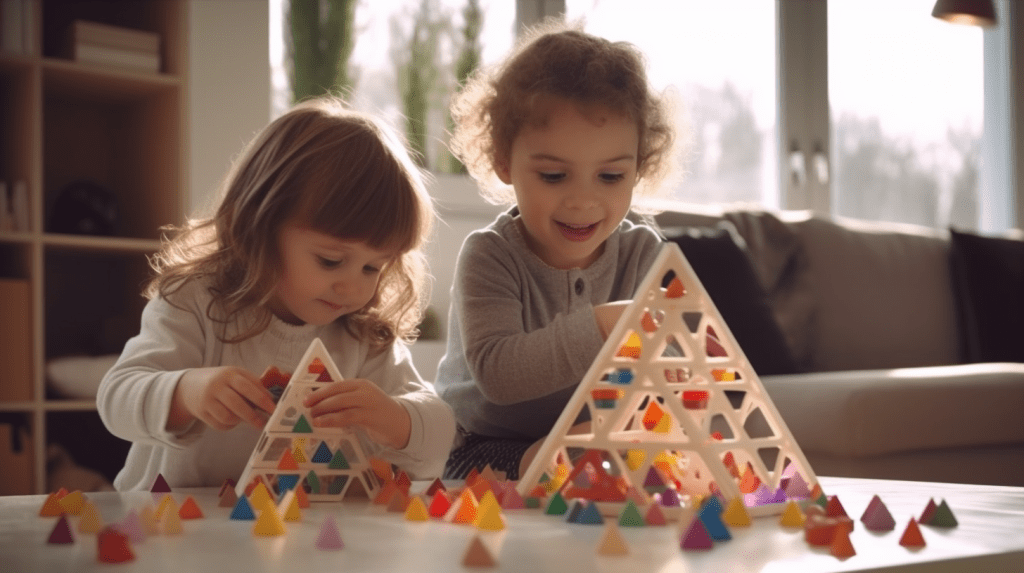
According to Feigenson, Dehaene, and Spelke (2004), infants as young as six months old show a rudimentary understanding of numerical concepts. They can discriminate between small and large sets of objects, demonstrating a basic sensitivity to numerical magnitude. As children grow older, their numerical sensitivity becomes more refined, and they begin to grasp more complex numerical concepts, such as counting and simple arithmetic.

One influential study by Libertus and Brannon (2010) investigated the development of numerical sensitivity in preschool-aged children. The researchers used a non-symbolic numerical comparison task in which children were shown arrays of dots and asked to identify the set with more or fewer dots. The results showed that children as young as three years old demonstrated an ability to make accurate numerical comparisons.
The developmental trajectory of numerical sensitivity continues into early primary school years. In an extensive study by Halberda et al. (2008), children’s numerical awareness was measured using a dot comparison task at various ages from five to seven years old. The findings revealed that children’s numerical discrimination abilities improved with age and were predictive of their later mathematical performance.
Understanding early numerical sensitivity has important implications for early mathematics education. By recognising children’s innate sensitivity to numerical information, teacher can design developmentally appropriate activities and interventions to stimulate their mathematical understanding. For example, incorporating activities that involve counting, comparing quantities, and exploring patterns can support the development of numerical sensitivity in young children.

Additionally, identifying children who may have difficulties in early numerical sensitivity can allow for early intervention and targeted support. Some children may struggle with developing numerical sensitivity due to factors such as working memory limitations or language barriers. Early identification and bespoke interventions can help address these challenges and promote positive mathematical development.
In conclusion, research on early numerical sensitivity highlights the innate numerical abilities of young children and their potential for mathematical learning from an early age. Understanding the developmental trajectory of numerical sensitivity and its implications for education can inform effective instructional strategies and interventions in early mathematics education.
References:
Feigenson, L., Dehaene, S., & Spelke, E. (2004). Core systems of number. Trends in Cognitive Sciences, 8(7), 307-314.
Halberda, J., Mazzocco, M. M., & Feigenson, L. (2008). Individual differences in non-verbal number acuity predict maths achievement. Nature, 455(7213), 665-668.
Izard, V., Sann, C., Spelke, E. S., & Streri, A. (2008). Newborn infants perceive abstract numbers. Proceedings of the National Academy of Sciences, 105(25), 8092-8095.
Libertus, M. E., & Brannon, E. M. (2010). Stable individual differences in number discrimination in infancy. Developmental Science, 13(6), 900-906.
Additional Resources:
Mazzocco, M. M., & Thompson, R. E. (2005). Kindergarten predictors of math learning disability. Learning Disabilities Research & Practice, 20(3), 142-155.
Mix, K. S., Huttenlocher, J., & Levine, S. C. (2002). Multiple cues for quantification in infancy: Is number one of them?. Psychological Bulletin, 128(2), 278-294.
VanMarle, K., Wynn, K., & Infanti, R. (2006). Twelve-month-old infants perceive numerosity of novel sets of objects. Cognition, 98(3), B27-B35.
 Mr Sanchez Tutoring