

Lev Vygotsky was a renowned psychologist whose sociocultural theory has had a significant impact on education, particularly in understanding the role of social interaction and cultural context in children’s learning and development. His concepts and principles have influenced current educational practices and pedagogical approaches.
These are some of the ways in which Vygotsky’s theory is used in classrooms today:
1. SOCIAL INTERACTION
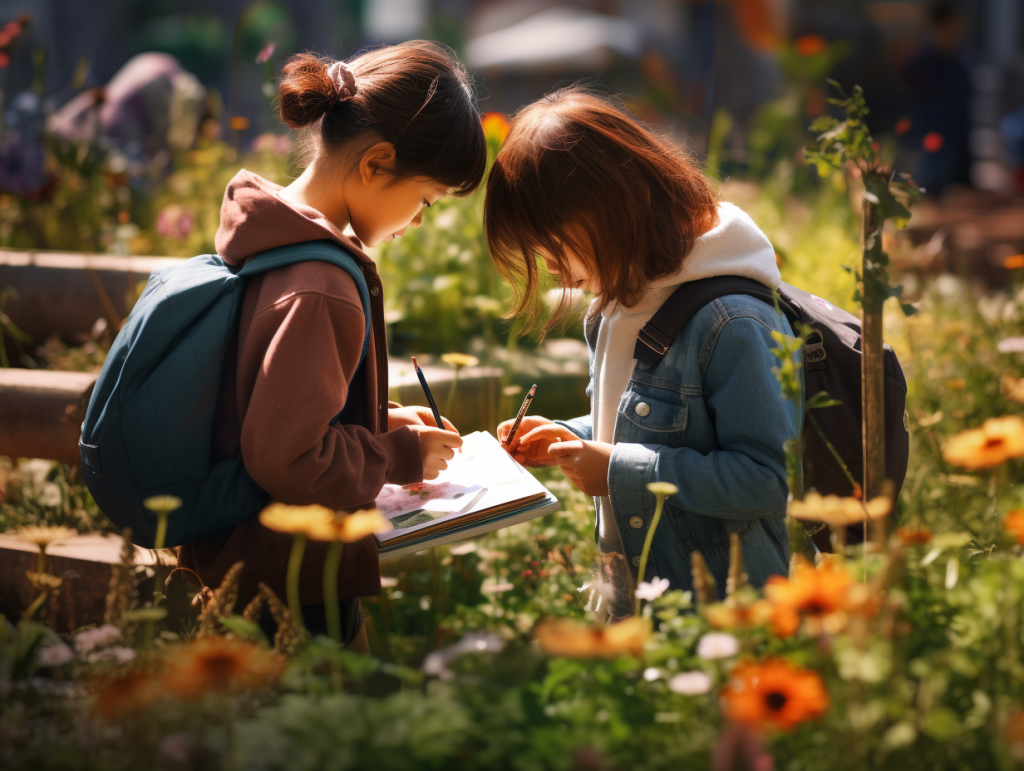
Vygotsky emphasised the importance of social interaction in children’s learning. Primary schools create opportunities for collaborative learning and peer interaction through group work, discussions, and cooperative learning activities. Teachers encourage pupils to work together, share ideas, and support each other’s learning through dialogue and collaboration.
Example of this in a primary classroom
One occasion in which I had the opportunity to witness the power of social interaction in children’s learning was during a Year 3 science lesson on plants. I wanted to provide my students with a hands-on and collaborative learning experience.
To start the lesson, I asked the children to go outside to explore the outdoor areas of our school. In small groups, they were tasked with finding different plants and sketching them in their science notebooks. This initial step allowed the students to actively engage with their surroundings and develop their observational skills.
Back in the classroom, they gathered in their groups to discuss their findings and share their sketches. They compared their drawings, pointing out unique features and similarities among the plants they had discovered. It was evident that the social interaction stimulated their curiosity and enthusiasm for the topic. After that, I assigned each group a specific plant to research in more depth. They were encouraged to collaborate, ask questions, and conduct further investigations about their assigned plant. The classroom buzzed with conversations as the children shared their knowledge, brainstormed their ideas, and worked together to find answers.
As the project progressed, the pupils collaborated on creating presentations about their plants, incorporating their sketches, research findings, and even some additional facts they had discovered. They practised their oral communication skills as they presented their work to the rest of the class during a mini “plant gallery” showcase. The social interaction among the children throughout this project was remarkable. They actively listened to one another, asked thoughtful questions, and offered support and encouragement. The collaborative nature of the activity increased their sense of belonging and the supportive learning community within the classroom.
Providing opportunities for social interaction and collaboration is crucial in the primary classroom. I witnessed first hand how the children’s understanding of plants deepened. They not only gained knowledge from their own research but also learned from their peers’ discoveries and perspectives. The experience not only enhanced their scientific understanding but also developed their teamwork, communication, and problem-solving skills. Overall, this personal experience enabled to create a classroom environment where children could actively engage with their peers, learn from each other, and develop a strong sense of belonging and community within our Year 3 classroom at Foxborough Primary School.
2. ZONE OF PROXIMAL DEVELOPMENT (ZPD)

He introduced the concept of the Zone of Proximal Development, which refers to the gap between a child’s actual developmental level and their potential developmental level with guidance and support. Primary schools utilise this concept by providing appropriate challenges and scaffolding to help children advance their learning. Teachers identify each student’s ZPD and provide targeted instruction and support to facilitate their progress.
Example of this in a primary classroom
In my Year 1 classroom at Foxborough Primary, I implemented the Zone of Proximal Development (ZPD) in all the activities I planned.
One example was the phonics lessons in which I differentiated tasks and I supported my pupils’ literacy development. By identifying the phonemes that each child already knew, I could tailor the lessons to their individual needs and provide them with the appropriate reading materials. During the phonics sessions, I assessed the children’s knowledge of sounds (phonemes) by conducting quick one-on-one assessments. Based on their proficiency, I categorised the children into different groups. Each group was exposed to flashcards containing known phonemes and a few new ones to expand their phonics skills gradually.
Then, I provided the children with books that aligned with the phonemes they were familiar with, ensuring that they could practice their decoding skills using texts that were at an appropriate level for their reading development. As they mastered new sounds, I introduced additional flashcards, gradually building their repertoire of phonemes.
By differentiating the phonics activities in this way, I was able to meet each child at their current level of understanding and provide them with the necessary support and challenge within their ZPD. The gradual introduction of new sounds allowed them to build their decoding abilities incrementally, leading to increased independence and confidence in reading. Through this approach, my pupils not only expanded their phonics knowledge but also developed a sense of ownership and agency in their reading journey. By providing them with materials and activities that aligned with their ZPD, I created a supportive and engaging learning environment where each child could progress at their own pace and experience success in reading.
3. SCAFFOLDING

Building on the concept of ZPD, primary school teachers provide scaffolding to support children’s learning. Scaffolding involves offering guidance, prompts, and assistance to help students master new concepts or skills. Teachers gradually reduce the level of support as children become more proficient and independent learners.
Example of this in a primary classroom
In my Year 3 classroom, we focused on addition and subtraction with numbers involving ones, tens, and hundreds. This unit aimed to build a solid foundation for the pupils’ understanding of place value and their ability to perform multi-digit addition and subtraction.
To introduce the concept of exchanging and regrouping, I began the unit by using concrete materials such as base ten blocks (dienes). Each student had their own set of base ten blocks, consisting of units, rods (representing tens), and flats (representing hundreds). I provided them with addition and subtraction problems that required exchanging or borrowing. During our lessons, I guided the children through the process of exchanging and regrouping using the base ten blocks. We discussed the importance of understanding the value of each place and how to decompose and compose numbers to perform operations accurately.
As the students gained confidence, I gradually reduced their reliance on the base ten blocks. I introduced the formal vertical method for addition and subtraction, demonstrating how to align the digits correctly and carry or borrow when necessary. We practised using this method together, with me providing support and guidance as needed. Throughout the unit, I encouraged independent practice and problem-solving activities to reinforce their understanding. As the children became more proficient, they were able to solve addition and subtraction problems involving ones, tens, and hundreds mentally, without the need for concrete resources.
By the end of the unit, they had developed a deep understanding of exchanging and regrouping. They could confidently apply the formal vertical method to solve multi-digit addition and subtraction problems. The gradual transition from concrete materials to the abstract method allowed them to build a strong foundation in place value and computational skills, enabling them to solve complex problems independently.
4. COLLABORATIVE LEARNING

The sociocultural theory stresses the importance of learning from more knowledgeable peers. Primary schools encourage collaborative learning environments where children work together on projects, problem-solving tasks, and group activities. This cultivates peer teaching, cooperative problem-solving, and the exchange of ideas and knowledge among pupils.
Example of this in a primary classroom
In my classroom, I implemented a strategy that involved more able children helping their peers and explaining concepts to their partners. This approach aimed to deepen their understanding of the content while simultaneously providing support to others who were within their zone of proximal development (ZPD).
During math lessons, I observed that my more able children often completed their tasks quickly and were left with additional time. Previously, I would provide them with extension tasks or challenges, but I noticed that they often became disengaged or bored. To address this, I introduced a peer support system where the more able children partnered with their peers who were struggling or needed additional guidance. The more able children took on the role of mentors, patiently explaining concepts, demonstrating problem-solving strategies, and providing guidance to their peers.
This not only helped their peers gain a better understanding of the content but also reinforced the more able children’s own learning. By explaining concepts to others, they were able to deepen their understanding and reinforce their own knowledge.
This approach was not limited to math lessons but also extended to writing tasks. During writing sessions, children would work in pairs to proofread and edit each other’s work. The more able children would guide their partners in identifying errors (missing punctuation, grammatically incorrect sentences, etc), suggesting improvements, and developing their editing skills. This collaborative process not only improved the quality of their writing but also generated a sense of shared responsibility and support within the classroom.
Implementing this strategy had several benefits. It allowed the more able children to remain engaged and challenged while providing valuable support to their peers. It created a positive and inclusive classroom culture where children felt comfortable seeking help and learning from one another. It also encouraged collaboration, communication, and empathy among the children. Overall, the strategy of more able children helping their peers proved to be an efficient way to improve learning progress and engagement in my classroom. It developed a supportive and inclusive learning environment where all children had the opportunity to reach their full potential and develop a deeper understanding of the content.
5. LANGUAGE AND THOUGHT
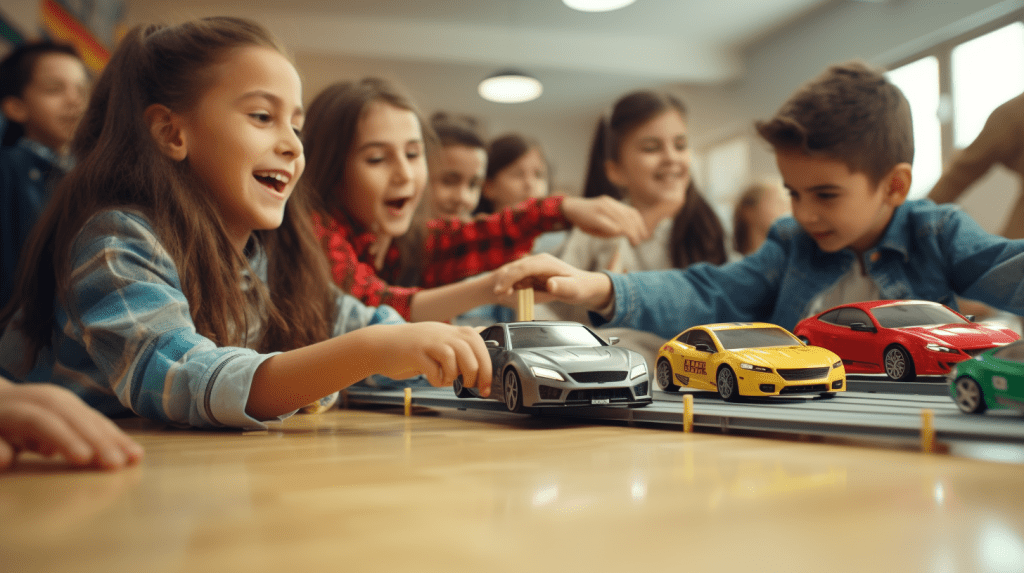
Vygotsky proposed that language plays a crucial role in cognitive development. Primary schools integrate language-rich environments, encouraging students to express their thoughts, engage in discussions, and articulate their understanding. Teachers facilitate meaningful conversations, ask probing questions, and provide language models to enhance children’s thinking and learning.
Example of this in a primary classroom
During a science experiment, children worked in small groups to test the friction of various surfaces, including a carpeted floor, an outdoor concrete floor, a wooden table, and a laminated floor at the back of the classroom. Using toy cars and a ramp they measured the distance their car went on each surface. They had to communicate their observations, explain their reasoning, and draw conclusions together.
This collaborative approach encouraged peer-to-peer discussions, allowing more able children to help and explain concepts to their peers, effectively bridging the Zone of Proximal Development and promoting a deeper understanding of the subject matter. The children carefully measured the distance their toy cars travelled after descending the ramp on each surface, recording their findings and comparing the results.
Through this hands-on activity, they not only gained a deeper understanding of friction but also learned to analyse and interpret data, developing their critical thinking skills. The engaging nature of the experiment originated lively discussions among the groups as they shared their observations and drew conclusions about the relationship between different surfaces and the distance travelled by the toy cars.
6. CULTURAL CONTEXT

The influence of cultural and social factors on learning are key concepts in Vygotsky’s theory. Primary schools create inclusive and culturally responsive classrooms that value and celebrate diversity. Teachers incorporate diverse perspectives, cultural references, and real-life examples to make learning meaningful and relevant to children’s experiences. This is usually seen more often in underprivileged areas where immigration and cultural diversity is more common.
Incorporating Vygotsky’s ideas into classroom practices means promoting active learning, collaboration, and the development of higher-order thinking skills. The emphasis on social interaction, scaffolding, and cultural context nurtures a supportive and inclusive learning environment where every child can thrive.
Example of this in a primary classroom
Last week, as part of our Themed Week on identity, we organised a session at our primary school that centred around celebrating cultural diversity. It was a fantastic opportunity for children to explore and embrace their unique cultural identities.
During the session, the children engaged in a creative art project where they created a vibrant mosaic of art silhouettes. Each child had the opportunity to express their individual culture and country of origin through symbols and colours incorporated into their silhouette. The classroom was filled with an incredible array of colours, patterns, and symbols representing the diverse backgrounds of our students.
As they worked on their art pieces, the children eagerly shared stories and information about their cultural heritage, fostering a deep sense of pride and appreciation for their roots. It was heart-warming to see how this activity provided a platform for children to not only celebrate their own cultural backgrounds but also learn about and respect the cultures of their peers.
By incorporating culturally responsive practices into our classroom, we created a supportive and inclusive environment that valued diversity. This activity allowed children to connect their personal experiences to their learning, making it more meaningful and relevant. It also promoted empathy, understanding, and acceptance among the students, fostering a sense of unity and belonging within our school community. Celebrating cultural identity is an essential aspect of our commitment to providing an inclusive education where every child feels seen, heard, and valued.
 Mr Sanchez Tutoring