

In today’s schools, the development of oral communication skills and vocabulary acquisition holds immense significance. Effective communication and a rich vocabulary empower students not only academically but also in facing the complexities of the world. However, it’s essential to recognise that not all students have equitable access to these critical skills. Groups like Pupil Premium students, often from disadvantaged backgrounds, face unique challenges in developing oracy and expanding their vocabulary. In this blog post, I aim to discuss the importance of oral communication and vocabulary acquisition in primary education, as well as explore the impact of socioeconomic status on vocabulary development. Additionally, I want to examine how innovative strategies from organizations like Voice 21 can help bridge the oral communication gap.

The Significance of Oracy and Vocabulary in Primary Education
Oracy, the ability to communicate confidently and effectively, forms the cornerstone of learning and personal growth. It encompasses active listening, articulate speaking, and the capacity to engage meaningfully in discussions. Coupled with a robust vocabulary, oracy skills empower students to express themselves clearly, comprehend complex texts, and excel academically across subjects.
It’s crucial to acknowledge the disparities in vocabulary development among students, largely influenced by their socioeconomic status. Research consistently demonstrates that children from lower-income families often enter school with significantly smaller vocabularies than their more affluent peers. This vocabulary gap persists throughout their educational journey, affecting their reading comprehension, writing proficiency, and overall academic achievement.
Voice 21: Advocates for Oracy in Primary Education
Recognising the urgent need to address these disparities, organizations like Voice 21 have emerged as champions of oracy skills in primary schools. Their research, innovative techniques, and strategies aim to level the playing field, ensuring that every child has the opportunity to develop essential communication skills.
Research Initiatives
Voice 21’s research efforts have revealed compelling findings:
- Improved Academic Outcomes: Proficient oracy skills are strongly correlated with improved academic performance, including advanced reading and writing abilities.
- Enhanced Social Skills: Oracy fosters empathetic listening, respectful dialogue, and effective collaboration, preparing students, including those from disadvantaged backgrounds, for success in diverse social and professional settings.
- Confidence Building: Engaging in meaningful speaking opportunities boosts students’ self-esteem, empowers them to share their voices, and bolsters their willingness to participate actively in classroom discussions.

Strategies for Implementing Oracy in Primary Schools
Voice 21 provides comprehensive resources and strategies to help educators integrate oracy into their primary school classrooms. These strategies include:
- Talk-rich Environment: Creating a classroom culture that values speaking and listening, providing all students with the chance to participate.
- Structured Dialogues: Equipping students with the skills to engage in structured discussions, debates, and presentations.
- Peer Assessment: Encouraging students to provide constructive feedback to one another, creating a collaborative and supportive learning environment.
- Curriculum Integration: Embedding oracy into various subjects to reinforce its importance and practical application.
- Teacher Training: Preparing educators with the skills and confidence to facilitate oracy development effectively, especially for students facing socioeconomic challenges.
Innovative Techniques for Vocabulary Development
Voice 21’s approach extends to vocabulary development, an essential component of oracy. These innovative techniques empower students to expand their vocabularies effectively:
- Repeat After Me: Teachers introduce new words by saying them aloud, prompting students to repeat, which reinforces pronunciation and familiarity. (My Turn, Your Turn)
- Visual Aids: When possible, visual aids accompany new words, providing context and aiding comprehension, particularly valuable for students from disadvantaged backgrounds. (Present new vocabulary along a picture/photo when possible)
- Child-Friendly Definitions: Teachers offer child-friendly definitions that are easy to grasp, ensuring a clear understanding of word meanings. (Prepare this prior to lesson, ensuring that the definition is child friendly)
- Contextual Sentences: New words are introduced within context, often through sentences related to the topic being studied, making them relevant and memorable. (Prepare a short activity in which children must utilise the new word in context)
- Active Usage: Students are encouraged to actively incorporate new vocabulary into their discussions, reinforcing application in meaningful ways. (Frequent reminders)
- Engaging Activities: Explicit activities encourage students to use newly acquired words in various contexts, making vocabulary acquisition interactive and enjoyable, bridging the vocabulary gap for disadvantaged students.
Diverse Groupings to Support Oracy
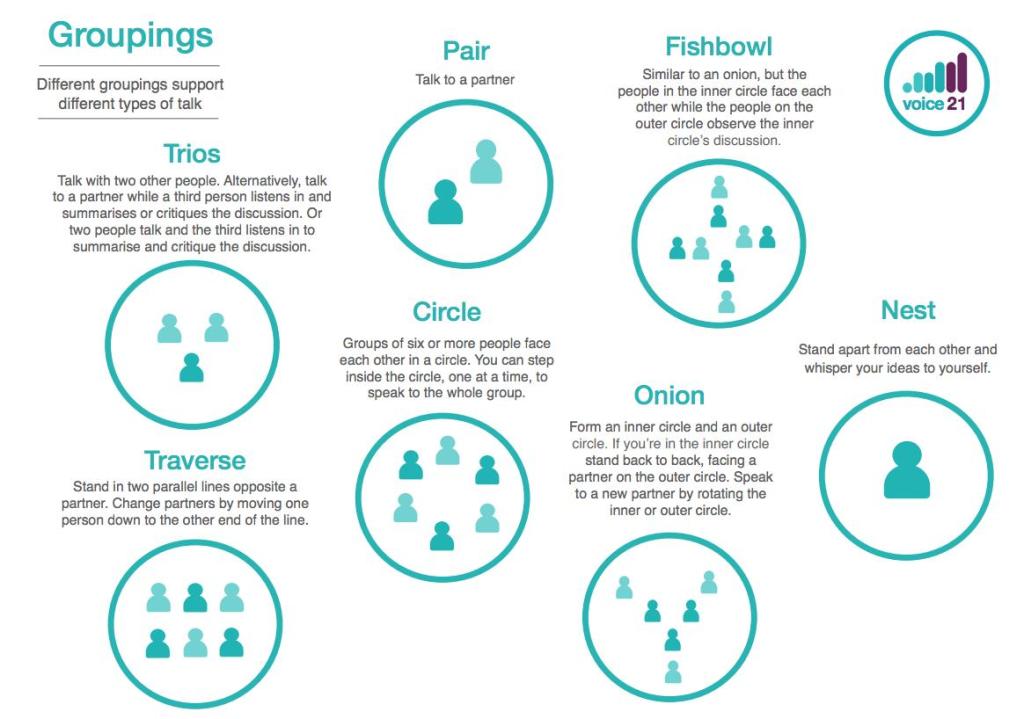
In line with Voice 21’s inclusive approach, diverse groupings facilitate effective oracy development in the classroom:
- Pairs/ talking partners: Students engage in discussions with a partner, practicing active listening and clear expression, a valuable opportunity for Pupil Premium students.
- Talking trios: Group conversations promote diversified perspectives and collaborative learning, essential for bridging oracy gaps among students from disadvantaged backgrounds.
- Onion: Structured groupings encourage students to face different partners, promoting structured discourse and language development.
- Fishbowl: Active listening is fostered as students observe inner-circle discussions, providing an opportunity for targeted support to Pupil Premium students.
- Nest: Individual reflection and clear articulation are encouraged, ensuring that all students, regardless of their socioeconomic status, have opportunities to participate.
- Traverse: Students engage in diverse interactions, actively participating and promoting inclusion for all.
Integration into the Primary School Curriculum
Implementing oracy strategies from Voice 21, innovative vocabulary techniques, and diverse groupings into the primary school curriculum can be achieved through the following steps:
- Professional Development: Provide training and support for teachers to understand and implement oracy, vocabulary techniques, and varied groupings effectively, recognising the needs of Pupil Premium students.
- Curricular Alignment: Integrate oracy skills, vocabulary development, and diverse groupings into existing subjects, ensuring that speaking, listening, word acquisition, and group interactions are incorporated into lesson plans, with a special focus on addressing disparities.
- Assessment and Feedback: Develop assessment criteria and provide regular feedback on oracy, vocabulary, and group interaction skills, assisting all students in tracking their progress and areas for improvement.
- Celebration of Achievement: Recognise and celebrate students’ achievements in oracy, vocabulary development, and effective group communication through presentations, debates, and language-rich activities, emphasising inclusivity and equitable opportunities.

Incorporating oracy into our curriculum offers a transformative opportunity for children to develop essential life skills. Effective communication, a rich vocabulary, and meaningful group interactions are not only vehicles for academic success but also cornerstones of personal and professional growth. These strategies will help empower the next generation to become confident, articulate, and empathetic communicators, while also enhancing their emotional intelligence to ensure they can lead happier lives.
 Mr Sanchez Tutoring